Have you ever wondered what holds massive bridges, towering skyscrapers, and complex industrial structures securely in place? Strength and reliability are essential in construction, and the adhesives you choose can make all the difference.
This is where Megapoxy comes in. Renowned for its superior bonding capabilities and unmatched durability, Megapoxy products are the gold standard for construction professionals who need reliable results. In this guide, we’ll explore what makes Megapoxy the preferred choice and examine two standout products: Megapoxy H and Megapoxy P1.
What is Megapoxy?
Megapoxy is a range of premium epoxy resin adhesives designed for construction and industrial applications. Renowned for exceptional performance, Megapoxy products offer superior structural bonding, chemical resistance, and durability. These qualities make Megapoxy ideal for infrastructure projects and every day repairs. Whether anchoring reinforcing bars or sealing concrete cracks, Megapoxy provides the peace of mind that comes with using a trusted, high-quality solution.
What Makes Megapoxy the Ultimate Epoxy Resin Solution?
The performance of Megapoxy comes from its advanced formulation, engineered for long-lasting, high-strength adhesion. It creates bonds that withstand heavy loads, fluctuating temperatures, and exposure to chemicals. Here’s why construction professionals trust Megapoxy:
- Versatility: Suitable for various applications, from civil infrastructure to specialised repairs.
- Ease of Use: Smooth application, fast curing times, and reliable results.
- Chemical Resistance: Withstands exposure to various chemicals, making it ideal for industrial environments.
Megapoxy H: The Heavy-Duty Epoxy Grout for Rigorous Applications
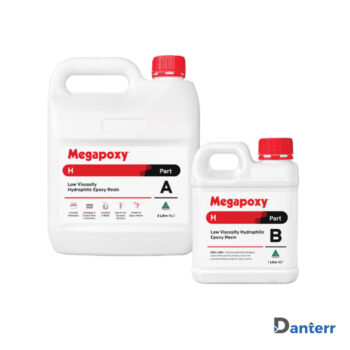
Megapoxy H is a heavy-duty, two-part epoxy grout known for its high compressive strength and excellent durability. It is specifically formulated for anchoring bolts, reinforcing bars, and other critical structural elements in concrete, making it the preferred choice for heavy infrastructure and industrial projects.
Benefits:
- Exceptional Bond Strength: Delivers unparalleled strength for securing structural components.
- Durability: Resistant to harsh environmental conditions, including extreme temperatures and chemical exposure.
- Versatile Applications: Suitable for high-stress areas in infrastructure and industrial facilities, ensuring stability.
Technical Specifications:
- Material: Two-part epoxy system with a 4:1 resin to hardener mix ratio.
- Compressive Strength: 100 MPa, providing robust support for heavy loads.
- Cure Time: 24 hours at 25°C, ensuring rapid project turnaround.
Available Sizes:
| Product Code | Description |
| 101844 | Megapoxy H 4L |
| 107638 | Megapoxy H 20L |
| 115071 | Megapoxy H 20L Grey |
Megapoxy P1: The Reliable Epoxy Paste for Specialist Bonding
Megapoxy P1 is an easy-to-use epoxy paste that offers exceptional adhesive properties and versatility. It is perfect for applications requiring a precise, strong bond on non-porous surfaces, such as concrete, steel, and timber. This product is well-suited for repairs and tasks that demand a smooth, consistent adhesive.
Benefits:
- Ease of Application: Smooth, easy-to-apply paste suitable for vertical and overhead surfaces.
- High Adhesion: Bonds effectively to a wide range of materials, ensuring reliability across various applications.
- Rapid Cure Time: Cures quickly without compromising strength, keeping your project on schedule.
Technical Specifications:
- Material: Equal parts resin and hardener ensure a consistent and strong adhesive bond.
- Adhesion Strength: Exceeds the tensile strength of concrete, providing dependable support.
- Cure Time: 24 hours at 25°C, with a pot life of 40 minutes at the same temperature.
Available Sizes:
| Product Code | Description |
| 111217 | Megapoxy P1 (Part A & Part B) 4L |
| 101845 | Megapoxy P1 (Part A & Part B) 20L |
Your Next Project, Simplified with Danterr!
Enter your email to explore our top-quality construction solutions. We’re here to support your project’s needs with innovative, sustainable products.
Catalogue Form
Applications of Megapoxy
Megapoxy H and Megapoxy P1 are suitable for various construction and industrial uses. Here’s where each product excels:
- Infrastructure Projects: Used in the construction of bridges, tunnels, and wind farms for anchoring and grouting.
- Industrial Foundations: Secures heavy equipment and machinery bases, ensuring long-term stability.
- Marine Applications: Effective in underwater environments where chemical resistance is critical.
- Commercial Construction: Reinforces load-bearing concrete structures like beams and columns.
- Concrete Repairs: Fills cracks and voids, providing a strong, durable fix.
- Building Facades: Bonds non-porous materials like stone, steel, and ceramics securely.
- Precision Adhesion: Ideal for smaller, detail-oriented bonding tasks in both interior and exterior applications.
- Structural Bonding: Used in specialised applications that require a consistent and long-lasting adhesive.
Tips on How to Use Megapoxy
- Surface Preparation: Ensure all surfaces are clean, dry, and free of contaminants like oil and grease. Sandblasting or wire brushing may be necessary for optimal bonding.
- Mixing: Follow the recommended mix ratio precisely. Use a mechanical mixer for uniform consistency.
- Application: Apply the mixed product immediately, using tools like trowels or brushes as needed. Be mindful of pot life and work efficiently.
- Curing: Allow the product to cure fully. Protect the application area from moisture and extreme conditions until it has set completely.
- Storage: Keep Megapoxy products in a cool, dry place to extend shelf life and maintain quality.
Conclusion
Both Megapoxy H and Megapoxy P1 meet the highest standards of strength and durability, making them ideal for various construction projects. Trust Megapoxy for the performance and reliability you need, backed by Danterr’s commitment to quality and expert support.
For more information on our epoxy grout solutions, contact Danterr today. Let us help you find the perfect Megapoxy product to elevate your next project.
📞: 1800 262 383
📧: [email protected]
Frequently Asked Questions:
Megapoxy is engineered with an advanced epoxy resin formulation that provides superior bond strength and high compressive resistance compared to conventional adhesives. While many adhesives struggle under heavy loads, fluctuating temperatures, or chemical exposure, Megapoxy maintains its integrity and performance in these demanding conditions. This makes it the preferred choice for construction projects where reliability is crucial.
Megapoxy is incredibly versatile and can bond effectively to a wide range of surfaces, including concrete, steel, timber, ceramics, glass, and some plastics. This makes it suitable for various construction and repair tasks, whether you’re anchoring steel beams to concrete or repairing cracks in a ceramic facade. The product’s strength and adaptability allow it to be used in both general construction and highly specialised applications.
Proper surface preparation is essential to ensure Megapoxy adheres well and performs to its full potential. Start by making sure the surface is dry, clean, and free of contaminants such as oil, grease, dust, or rust. Use a wire brush, sandpaper, or sandblasting equipment to roughen smooth surfaces, which helps create a stronger mechanical bond. Wipe the surface clean after roughening to remove any residue, ensuring a pristine area for application.
Yes, Megapoxy P1 is specifically designed for versatility and ease of application, including vertical and overhead surfaces. Its thick, non-sagging paste consistency ensures that it stays in place even when applied to vertical areas, making it ideal for tasks such as securing wall panels, bonding vertical concrete joints, or performing overhead structural repairs.
Yes, certain Megapoxy products, like Megapoxy H, are suitable for underwater applications. These products have been specially formulated to provide a strong, reliable bond even when exposed to water or submerged conditions. This makes them ideal for marine construction projects, such as pier repairs, underwater structural anchoring, and coastal concrete reinforcements. Always check the product specifications to ensure it meets the requirements for your specific underwater application.
Yes, safety is important when working with Megapoxy. Always wear personal protective equipment (PPE), such as gloves, safety goggles, and a face mask to protect against skin contact, eye irritation, and inhalation of fumes. Ensure your workspace is well-ventilated to minimise exposure to any fumes and avoid eating, drinking, or smoking while handling the product. If you accidentally come into contact with Megapoxy, follow the safety guidelines provided on the product’s safety data sheet (SDS), including immediate washing of the affected area.
While Megapoxy is commonly used by construction professionals, it is also suitable for high-strength DIY projects. DIY enthusiasts can use Megapoxy for tasks such as repairing concrete cracks, bonding timber, or anchoring heavy fixtures. However, proper preparation and safety measures are essential to achieve the best results. If you are new to using epoxy adhesives, practising on a small, non-critical area first can be helpful.
If you accidentally get Megapoxy on your skin, wash the affected area immediately with soap and warm water. Avoid using solvents to clean your skin, as they can cause further irritation. If the epoxy has already started to harden, gently remove it by peeling (not scraping) and then wash the area thoroughly. If you experience prolonged irritation, redness, or any signs of an allergic reaction, seek medical attention promptly.
Yes, you can paint over cured Megapoxy once it has fully hardened. To prepare the surface, lightly sand the cured epoxy to create a rough texture that will help the paint adhere better. Make sure the surface is clean and free of dust before applying paint. Most types of paint, including epoxy-based and polyurethane paints, work well over cured Megapoxy, allowing you to match or blend the repair area seamlessly with the surrounding material.
Removing cured Megapoxy can be challenging due to its strong adhesive properties. Here are a few methods:
- Mechanical Removal: Use tools such as a chisel, scraper, or angle grinder to break up and remove the hardened epoxy. Be careful not to damage the underlying surface, and always wear protective gear to avoid injury from flying debris.
- Heat Application: Applying heat with a heat gun can soften the epoxy, making it easier to scrape off. However, be cautious when using heat, especially on flammable or sensitive surfaces.
- Solvents: For uncured or partially cured epoxy, you can use solvents like acetone or isopropyl alcohol to dissolve the adhesive. Note that solvents are less effective on fully cured epoxy and should be used in well-ventilated areas.
- Sanding or Grinding: For larger areas, using a power sander or grinder may be necessary to remove the epoxy. Ensure you wear appropriate protective gear, such as a dust mask and safety goggles.
Note: Always read the safety instructions on the product label and take necessary precautions when attempting to remove cured epoxy. If in doubt, consult a professional for removal advice.
Stay Updated with Danterr!
Subscribe to Our Newsletter for the Latest in Construction Solutions