Construction procurement teams rarely have the time to give every material package the same level of attention. Larger packages naturally attract greater commercial scrutiny, but spend alone does not always indicate how important a material is to project delivery.
A relatively small package can warrant closer attention if it has a long lead time, requires specialised technical documentation, has limited alternatives or is needed before another construction activity can proceed. For Procurement Directors and commercial teams, the challenge is therefore not simply deciding which packages cost the most, but identifying where the potential consequence of an unresolved material requirement and the time available to address it justify additional attention.
A low-value package is not necessarily a low-priority package.
Why Project Spend Doesn’t Always Reflect Material Criticality
Package value is an important commercial consideration in construction material procurement, but it is only one factor in deciding how procurement resources should be allocated. A high-value package may involve familiar products, established suppliers and several acceptable sourcing options, while a much smaller package may involve a specialised specification, limited alternatives or technical information that must be reviewed before installation.
Consider two material packages with similar purchase values. Package A involves a standard product with several suitable supply options, straightforward documentation and enough time before it is required on site. Package B requires technical approval, has fewer suitable alternatives and is needed before a dependent construction activity can proceed. Although their purchase values are similar, Package B may deserve greater procurement attention because the potential consequence of it not being ready is higher and there is less flexibility to resolve an issue later.
Most smaller packages can proceed through normal procurement processes. The objective is to recognise the exceptions by considering two questions alongside spend: What could happen if the material is not ready when required? And how much time or flexibility would the project have to resolve the issue?
Which Smaller Material Packages Deserve Earlier Attention?
Not every smaller material package requires additional procurement attention. The significance of a package depends on how its specific characteristics affect the consequences of an unresolved requirement and the project’s ability to respond.
The following factors help procurement teams make that distinction.
Lead Times and Material Availability
Lead time matters in relation to the procurement window available, rather than as an isolated number. A longer lead time may be manageable when requirements are confirmed well in advance, while a shorter lead time can become more significant when the material is needed soon or quantities and specifications remain unresolved.
Procurement teams should therefore establish whether the material is stocked, manufactured or sourced to order, when specifications and quantities must be confirmed, and how much contingency remains between expected supply and the required-on-site date. The less time available to recover from a change in availability or sourcing, the stronger the case for giving the package additional attention.
Technical Specifications and Documentation
Technical requirements can increase the time needed to move a material package from identification to purchase. A product may be commercially available but still require technical data, testing information, engineering review or project-specific approval before it can be accepted.
Danterr’s Starbars™ GFRP reinforcement provides a practical example. Its technical data includes physical properties, design references, available dimensions and installation requirements. The documentation also states that field bending is not permitted and that required bends or hooks must be factory formed. For procurement and technical teams, this means the required bar dimensions and configuration may need to be established alongside the relevant technical review before the package is ready to purchase.
The broader consideration is not simply whether technical documentation exists, but what information needs review, who needs to approve it and how much time remains to resolve those requirements. Supplier documentation can support that assessment, while engineering, design and project-specific approvals remain with the appropriate project stakeholders.
Alternative Supply Options
Alternatives determine how much flexibility the project retains if the preferred sourcing option becomes unavailable or unsuitable. Having several suppliers or products in the market can provide options, but availability alone does not establish that those options meet the project’s requirements.
Steel reinforcement provides a useful example. A reinforcement package may involve different steel reinforcing bar sizes, configurations or reinforcing mesh products. Multiple products or supply options may be available, but they should not be treated as automatically interchangeable. Any proposed option still needs to satisfy the project’s design, specification and relevant technical approvals.
For procurement teams, the important question is therefore not simply “Is there another product?” It is “Is there another technically suitable option, and how much time would it take to assess and approve it?” A package with readily acceptable alternatives offers greater flexibility than one where a change would trigger additional engineering, design or client review.
Construction Sequence and Dependencies
The importance of a material package can increase when another construction activity depends on it being available, approved or installed. In that situation, the procurement consequence is linked to the material’s position in the construction sequence rather than its purchase value.
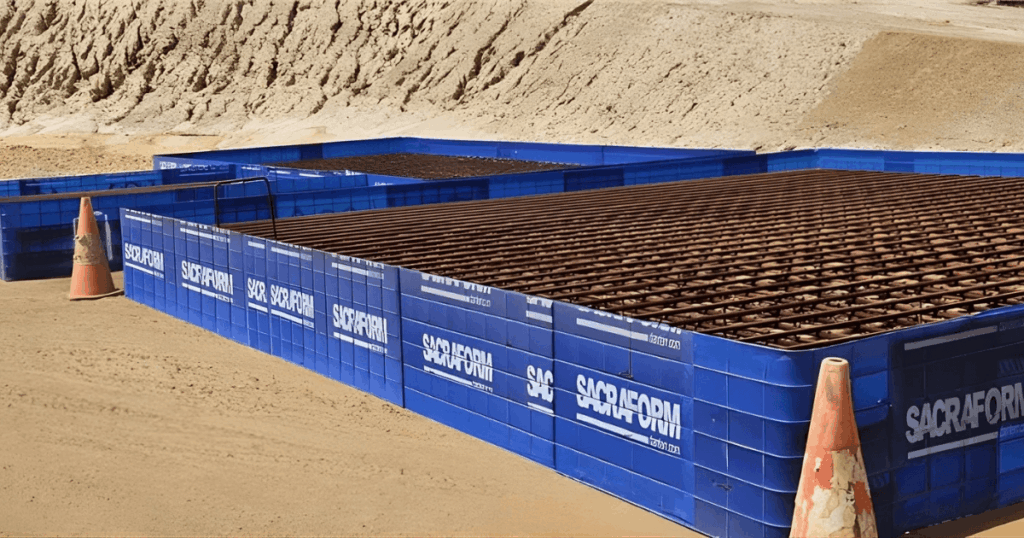
Sacraform™ provides a practical example. Danterr’s Sacraform™ is a stay-in-place sacrificial formwork system available in several standard sheet widths. It can be cut and bent on site, while custom shapes or sizes can be discussed for specific project requirements. For a contractor, this means the required dimensions, quantities and configuration need to align with the footing, beam or below-slab application and the planned sequence of works.
The procurement consideration is therefore not that sacrificial formwork is inherently critical. It is whether the project has enough flexibility if the required configuration, quantity or timing is not resolved when needed. Procurement teams should understand when the material is first required, which activity depends on it and whether the construction sequence provides room to respond if requirements change.
Delivery and Coordination Requirements
Availability at the supplier does not necessarily mean a material is ready to support the construction program. Some packages require quantities to arrive in particular stages or need coordination around site access, unloading, handling and storage.
The significance of these requirements depends on how easily delivery arrangements can be changed. A package delivered once to a site with suitable storage may need little additional coordination. A similarly valued package requiring staged deliveries or close alignment with construction activities may provide less flexibility if delivery arrangements change. Procurement teams should therefore consider delivery requirements as part of the package’s overall consequence and response window, rather than treating logistics as a separate purchasing task.
Taken together, these factors help explain why two similarly valued packages can deserve different levels of attention. They do not automatically make a package critical; they establish the conditions procurement teams should consider before deciding what response is proportionate.
A Practical Framework for Prioritising Smaller Material Packages
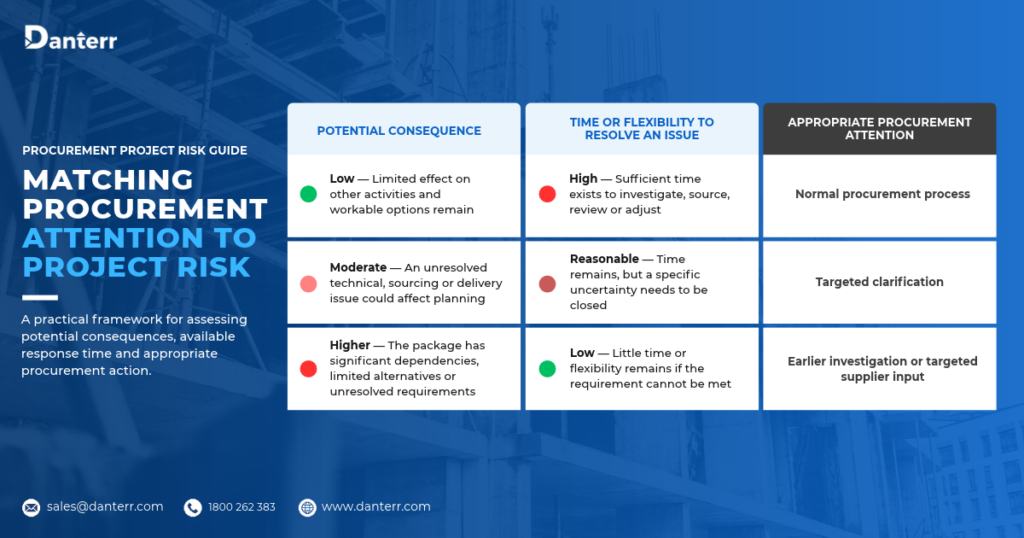
Once those characteristics are understood, the next question is what level of procurement attention they justify. Rather than reassessing the same individual factors, procurement teams can bring them together through two considerations: potential consequence and time or flexibility to respond.
The framework can be applied during tendering, preconstruction planning or development of a construction project procurement plan. It does not require formal scoring. Its purpose is to help procurement teams determine whether an issue can remain within the normal process, needs a specific clarification or warrants earlier attention.
For example, an uncertain specification may require engineering input, while an uncertain sourcing arrangement may justify a supplier enquiry. The response should address the particular uncertainty rather than automatically escalating every smaller package.
When Targeted Supplier Engagement Adds Value
Supplier engagement becomes useful when the framework identifies an information gap that the supplier is well placed to clarify. This may involve confirming current availability or indicative lead time, providing technical documentation, explaining standard and project-specific configurations, identifying available supply options or clarifying delivery requirements.
The purpose of the discussion is to obtain information that supports a procurement decision. It may confirm that the package can proceed normally, identify a technical matter for further review or show that earlier investigation is justified. An ordinary supplier enquiry does not itself appoint the supplier or create a purchasing commitment, and project-specific engineering, commercial and approval requirements remain in place.
The Australian Government’s 2025 National Sustainable Procurement in Infrastructure Guideline provides supporting context around early market engagement, supply-chain capability and potential challenges. Its primary focus is sustainable procurement and decarbonisation in Australian public infrastructure, and it distinguishes broader early market engagement from formal Early Supply Chain Involvement (ESI). The distinction is relevant here: targeted technical or availability enquiries should not be presented as formal ESI.
Danterr Project Experience: Custom Expansion Joints for Gold Coast Light Rail Stage 3
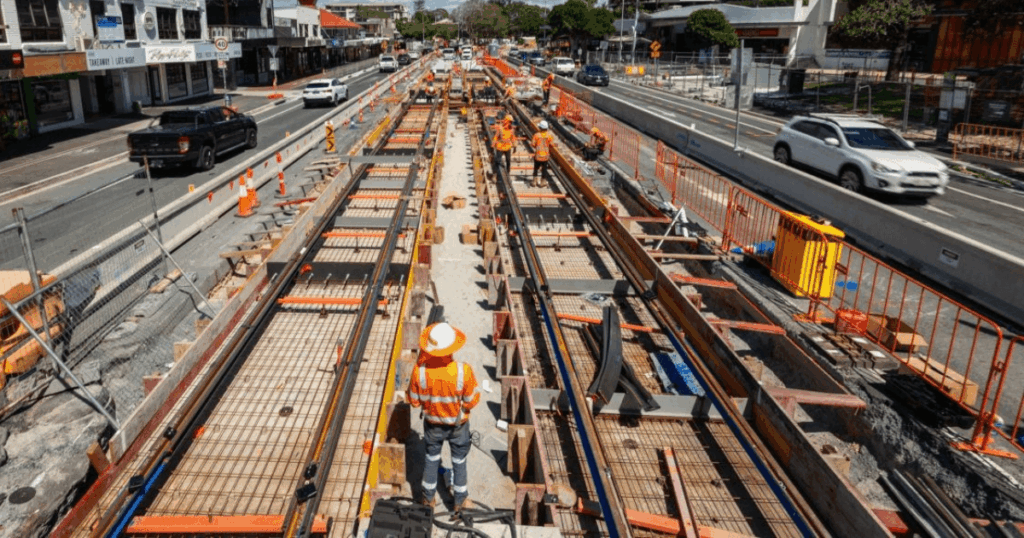
On the Gold Coast Light Rail Stage 3 project, John Holland required a custom expansion joint solution suited to the track slab construction process. The requirement was to support continuous concrete pouring while meeting the project’s specific construction needs.
Danterr became involved during the design phase, working with John Holland to develop a suitable custom expansion joint. Prototype joints were trialled on site before the contractor proceeded with the solution.
The process involved an extended period of technical development and review, with approximately 18 months between the initial site trials and the first construction order.
Following the contractor’s decision to use the custom joints, Danterr supported their manufacture, storage and delivery in line with the project’s construction programme. According to Danterr’s project team, John Holland adopted the solution for use across the project.
The key lesson: Specialist material packages may require significant technical input, early supplier engagement and supply planning, regardless of their purchase value. Considering these requirements early can help contractors make more informed product and procurement decisions.
Prioritising Supplier Attention Where It Matters Most
Procurement priority should reflect both the commercial value of a package and the potential project consequences if its requirements cannot be resolved when needed. Lead times, technical requirements, available alternatives and construction dependencies become more important when the project has limited time or flexibility to respond.
For Procurement Directors allocating attention across numerous packages, this creates a practical decision rule: the greater the potential consequence and the less time or flexibility available to resolve an issue, the stronger the case for additional procurement attention. A smaller package with low consequences and ample flexibility can follow normal processes; one with greater consequences and limited flexibility may justify targeted clarification or earlier investigation.
Package spend tells procurement teams how much commercial value is involved. Consequence and flexibility help determine how much attention the package deserves.
Reviewing a Material Package with Specific Technical or Supply Requirements?
Some material packages warrant closer attention because of their technical, sourcing or delivery requirements.
Speak with Danterr about relevant product information, availability and supply considerations to help inform your project’s procurement decisions.
📞: 1800 262 383
📧: [email protected]