On any construction site, safety is more than just ticking off rules on a checklist; it is about protecting people, keeping projects moving, and building trust across the team. Site safety compliance is simply making sure every legal, practical, and on-the-ground measure is in place to keep workers, contractors, and even the public out of harm’s way.
In Australia, this is backed by clear frameworks like the WHS Act 2011, its Regulations, and Codes of Practice, along with the National Construction Code (NCC). These set the standards for how construction work should be planned, managed, and delivered. Failing to meet them does not just risk fines or project delays; it can mean accidents, serious injuries, or lasting reputational damage.
At Danterr, we see compliance as more than paperwork. For us, it is about giving crews practical, reliable tools that make safe work easier every day, from rebar protection and PPE through to smart digital monitoring systems that provide instant, audit-ready records.
What Is Site Safety Compliance in Australia?
In simple terms, site safety compliance is about ensuring construction activities meet the minimum safety requirements under Australian law. The WHS Act 2011 and WHS Regulations place clear duties on PCBUs (Persons Conducting a Business or Undertaking) to eliminate or minimise risks to health and safety as far as is reasonably practicable.
Key drivers of compliance include:
Compliance is not optional. It’s the foundation of every safe, productive, and legally sound project.
The 5 Essentials of Site Safety Compliance
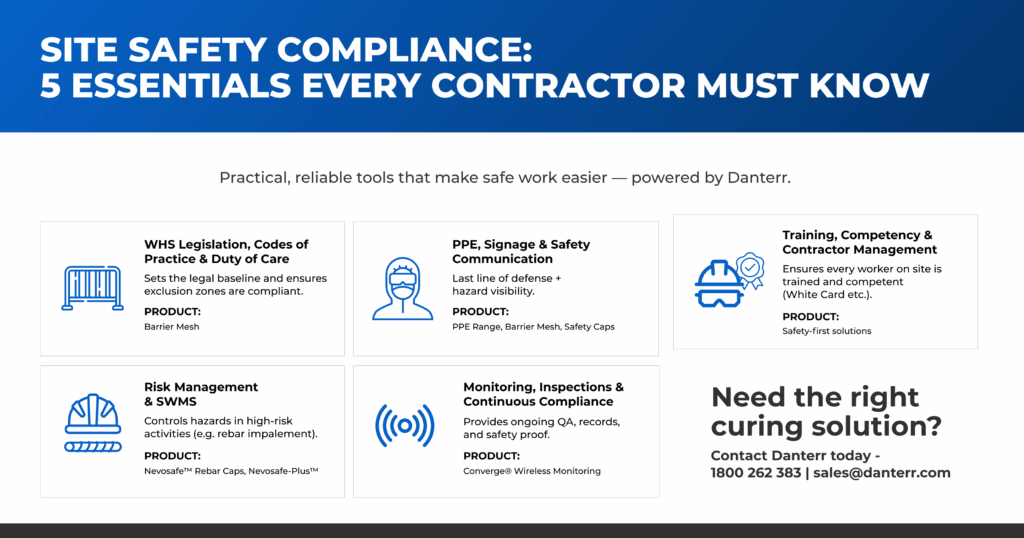
1. WHS Legislation, Codes of Practice & Duty of Care
The foundation of site safety compliance is clear: every activity must meet the legal standards set by the WHS Act, Codes of Practice, and the National Construction Code. That means properly marked exclusion zones, safe access for workers, and clear site demarcation. Danterr’s Barrier Mesh is designed with these exact requirements in mind, making it simple for contractors to set up compliant, visible, and controlled work areas that align with every regulation from day one.
2. Risk Management & SWMS
Managing high-risk activities like concrete pours, formwork, and rebar handling starts with clear and compliant Safe Work Method Statements. Danterr’s Nevosafe™ and Nevosafe-Plus™ Reinforced Caps are built to meet these requirements, protecting workers from rebar impalement and ensuring every site stays aligned with SWMS obligations. By using the right protective products, contractors can ensure their SWMS controls are practical and effective.
3. Training, Competency & Contractor Management
Every worker on site must hold a White Card and demonstrate competency through proper training and inductions. Danterr supports this framework by supplying safety-first solutions, such as Nevosafe™ Reinforced Caps, which are quick to install and reduce the risk of unsafe practices, reinforcing the importance of training with compliant, practical tools.
4. PPE, Signage & Safety Communication
Personal protective equipment is the last line of defence when other controls aren’t enough. Danterr provides a complete PPE range, from safety glasses and gloves to gumboots and respirator masks, along with Barrier Mesh and Yellow Safety Caps. These products not only protect workers but also make risks visible, keeping safety communication front and centre.
5. Monitoring, Inspections & Continuous Compliance
Compliance doesn’t stop once work begins; it requires constant monitoring and proof of safe practices. Danterr’s Converge® Wireless Concrete Monitoring delivers real-time data on curing and temperature while generating audit-ready reports. This gives contractors the visibility and records needed to maintain ongoing compliance with confidence.
It’s tempting to think of compliance as just another requirement, but in reality, it’s what keeps projects moving safely and successfully. The benefits are clear:
- Worker Protection: Prevents accidents, injuries, and fatalities.
- Legal Security: Avoids fines, penalties, and costly shutdowns.
- Reputation: Establishes trust with clients, regulators, and the broader community.
- Efficiency: Well-managed safety improves productivity and reduces downtime.
Compliance is not a burden; it’s an investment in safer, stronger, and more respected projects.
Site safety compliance isn’t just about ticking legal boxes; it’s about building safe, efficient, and respected projects. From exclusion zones and rebar protection to PPE and digital monitoring, Danterr provides the tools to help every contractor meet WHS obligations with confidence. At Danterr, safety isn’t optional, it’s built into every product we supply.
 : 1800 262 383
 : [email protected]
Frequently Ask Questions (FAQs)